
Watershed
Stories from the Smith River Alliance NewsletterRestoring East Fork Mill Creek

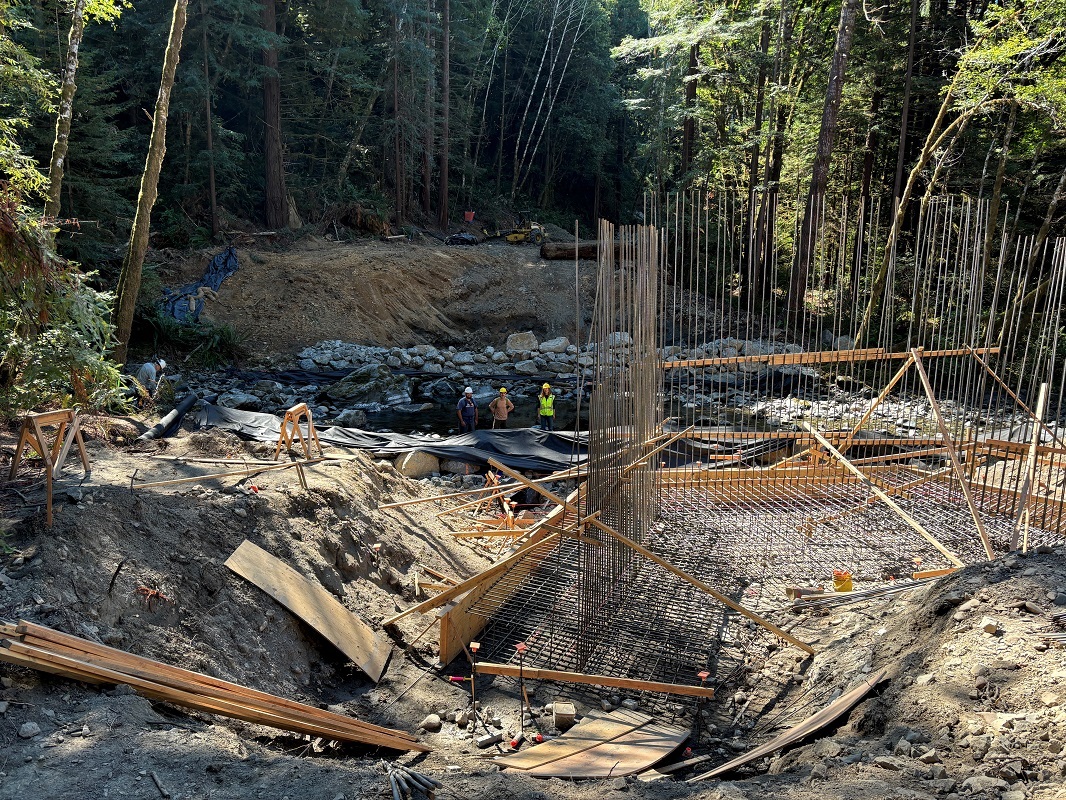
A new East Fork Mill Creek Bridge is under construction.
Transformational habitat restoration is underway in the East Fork of Mill Creek, within one of the Smith’s most productive salmonid tributaries. For several decades, a 650’ levee road has bisected once-optimal rearing habitat of a critical East Fork floodplain near the confluence of Kelly Creek. Our project objective is to support salmonid recovery by reconnecting the East Fork to seven acres of this broad, low-velocity floodplain. Restoration is occurring over the next two years that will remove human infrastructure, install large wood structures, and dig “starter channels.”
This year, most of the completed work involved relocating the old road to a new location upstream where a naturally confined section of stream will see a new bridge crossing installed. The new structure will allow the California Department of Parks and Recreation to complete landscape-scale restoration in a key part of the Mill Creek watershed. In 2025, we will complete the road relocation, remove approximately 6,500 cubic yards of old levee road fill now restricting stream flows across the floodplain, and create three new floodplain channels within the project footprint. These new channels will have a range of depths and side slopes, providing varied habitat zones.
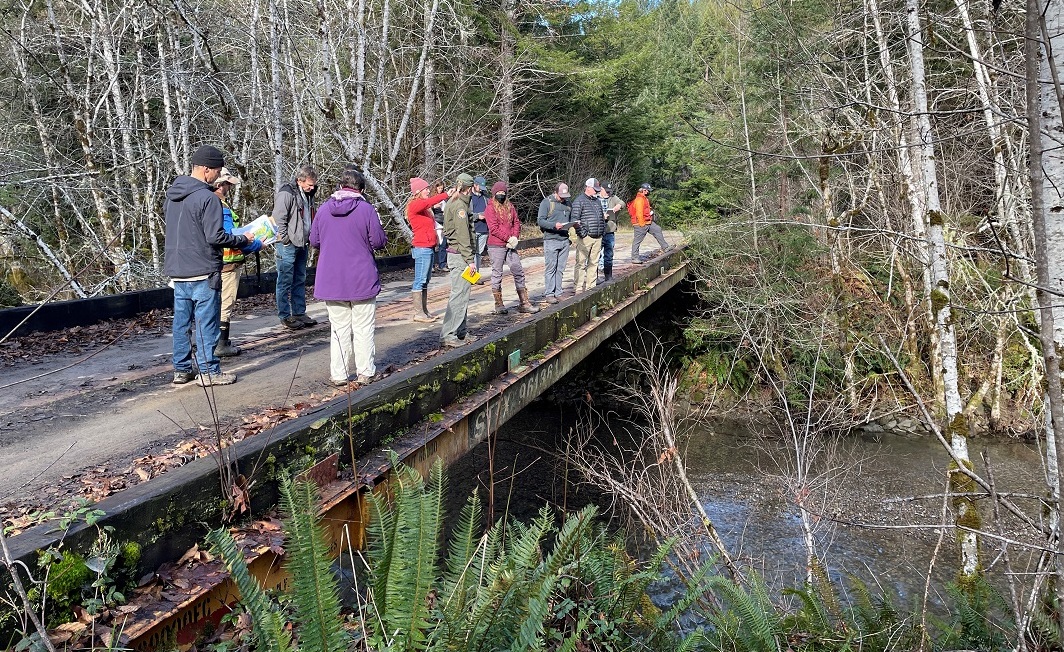
The existing bridge including associated abutments and accompanying roadbed constrict stream flows and fluvial processes. These features will be removed.
The project also involves installing large wood structures (nine in the main channel plus ten in the floodplain) to provide habitat complexity in support of salmon and other aquatic species. Structures will be created using seventy-five redwood and Douglas-fir logs collected on-site and will accelerate interactions that lead to complex habitat. These structures will increase the frequency of channel-floodplain interactions and the amount of flow conveyed across the floodplain. The large wood structures will be self-maintaining and restore dynamic natural processes in Mill Creek.
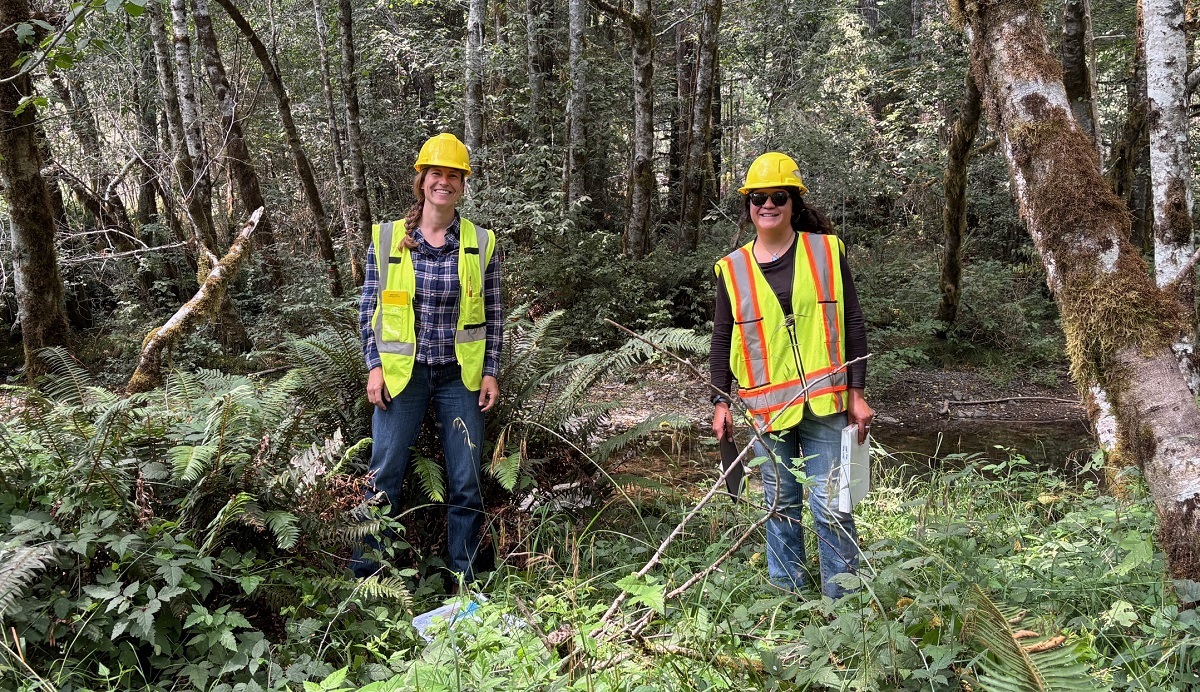
The Smith River Alliance East Fork Mill Creek project team: Restoration Program Coordinator Monica Scholey and Fisheries Biologist Priscilla Winters.
We would like to thank: the National Oceanic and Atmospheric Administration (NOAA) for providing funding for the project through the Transformation Habitat Restoration and Coastal Resilience Grants from the Bipartisan Infrastructure Law and Inflation Reduction Act; and the California Department of Fish and Wildlife (CDFW) for funding under the Nature Based Solution: Wetlands and Mountain Meadows Grant. The California Department of Parks and Recreation has supported the project with valuable in-kind staff contributions. Smith River Alliance (SRA) is honored to support this project which would not be possible without NOAA, CDFW, and Parks.
Communities Stand Strong Against Strip Mining

Read some of the press and letters submitted in support of the proposed mineral withdrawal.
Learn more.
Experience the Smith

Clear waters, old-growth forests, salmon and bears... get to know the world famous Smith River and see where we work. Learn more.